
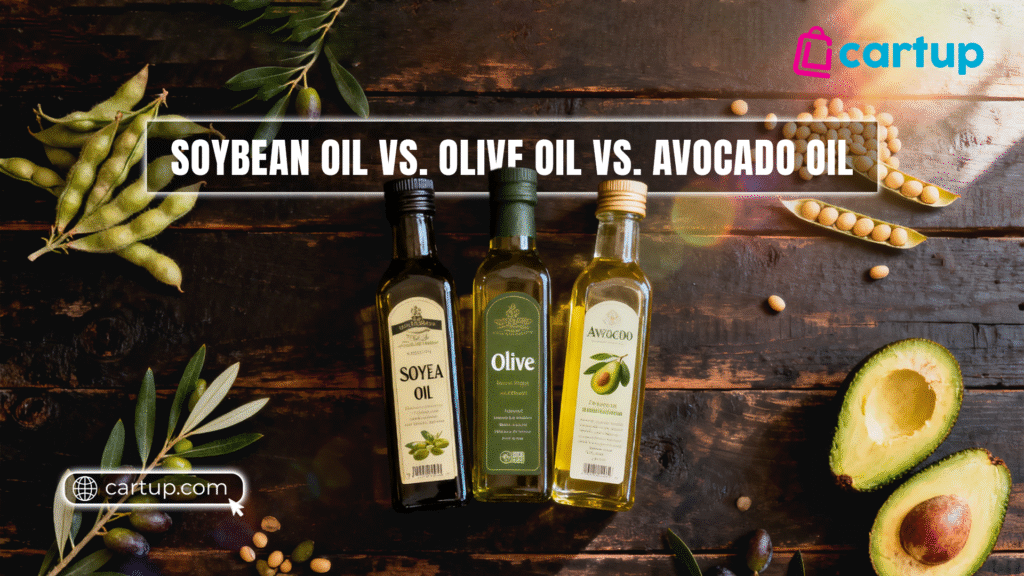
Choosing the right cooking oil affects both flavor and health, and with so many options available in grocery stores, many people wonder whether soybean, rice bran, or sunflower oil is best for everyday use..
This guide compares their nutrition, smoke point, and cooking performance to help you choose the right one.
Key Takeways
- No single oil is perfect for all cooking styles
- Rice bran oil is best for heart health
- Sunflower oil is best for high-heat cooking
- Soybean oil is best for affordable everyday use
- Using multiple oils gives the best results
How Soybean, Rice Bran & Sunflower Oils Are Different?
| Feature | Soybean Oil | Rice Bran Oil | Sunflower Oil |
| Smoke Point | 450°F | 450–490°F | 440–480°F |
| Main Fat Type | Polyunsaturated | Balanced (Mono + Poly) | Mostly Polyunsaturated |
| Best Use | Deep frying | All-purpose cooking | Frying & high-heat cooking |
| Heart Health | Moderate | Excellent | Very Good |
| Inflammation Risk | Higher (omega-6) | Low | Moderate |
Overview of Top Cooking Oils ( Soybean, Rice Bran & Sunflower Oils)
1. Soybean Oil
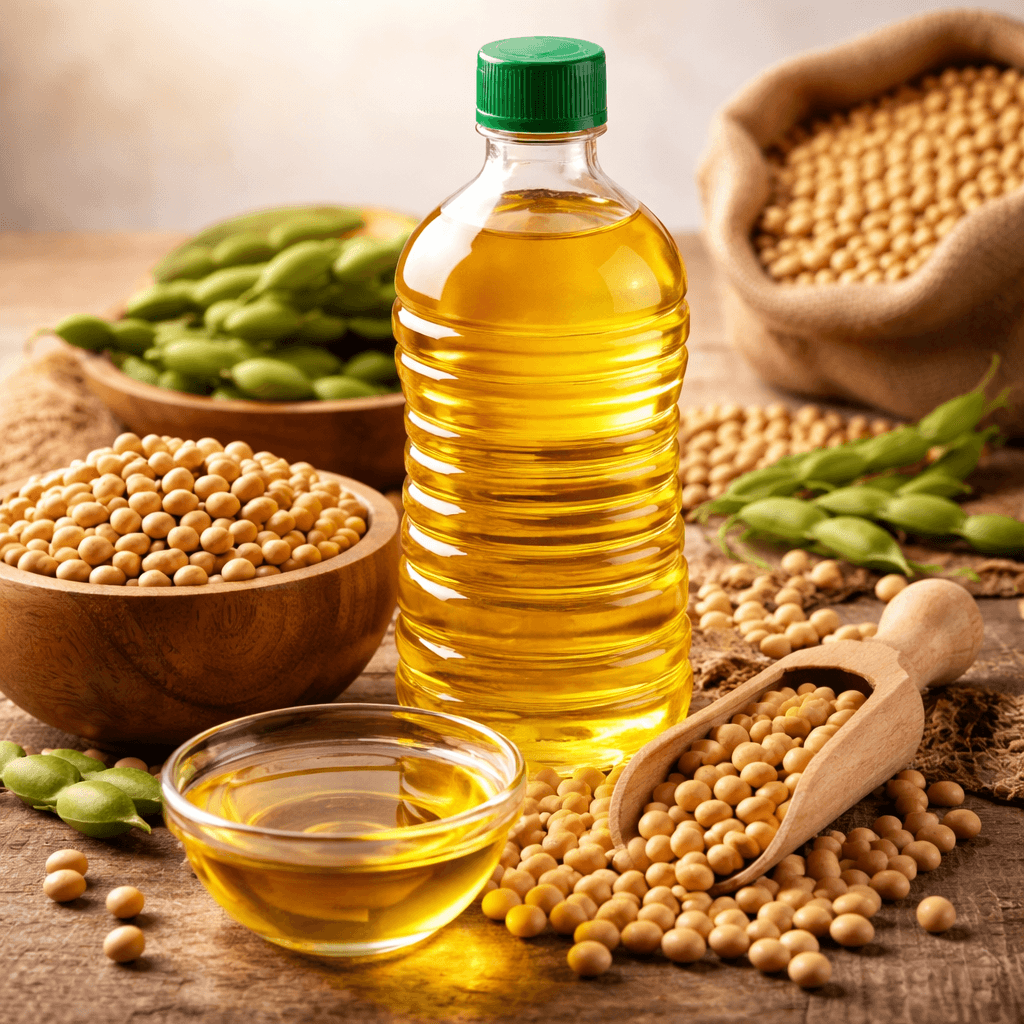
Soybean oil is one of the most widely used cooking oils in the world. It is extracted from soybeans and commonly used in homes, restaurants, and food manufacturing.
Key characteristics:
- Neutral flavor
- Affordable price
- High smoke point
- Rich in polyunsaturated fats
- Contains omega-6 fatty acids
2. Rice Bran Oil
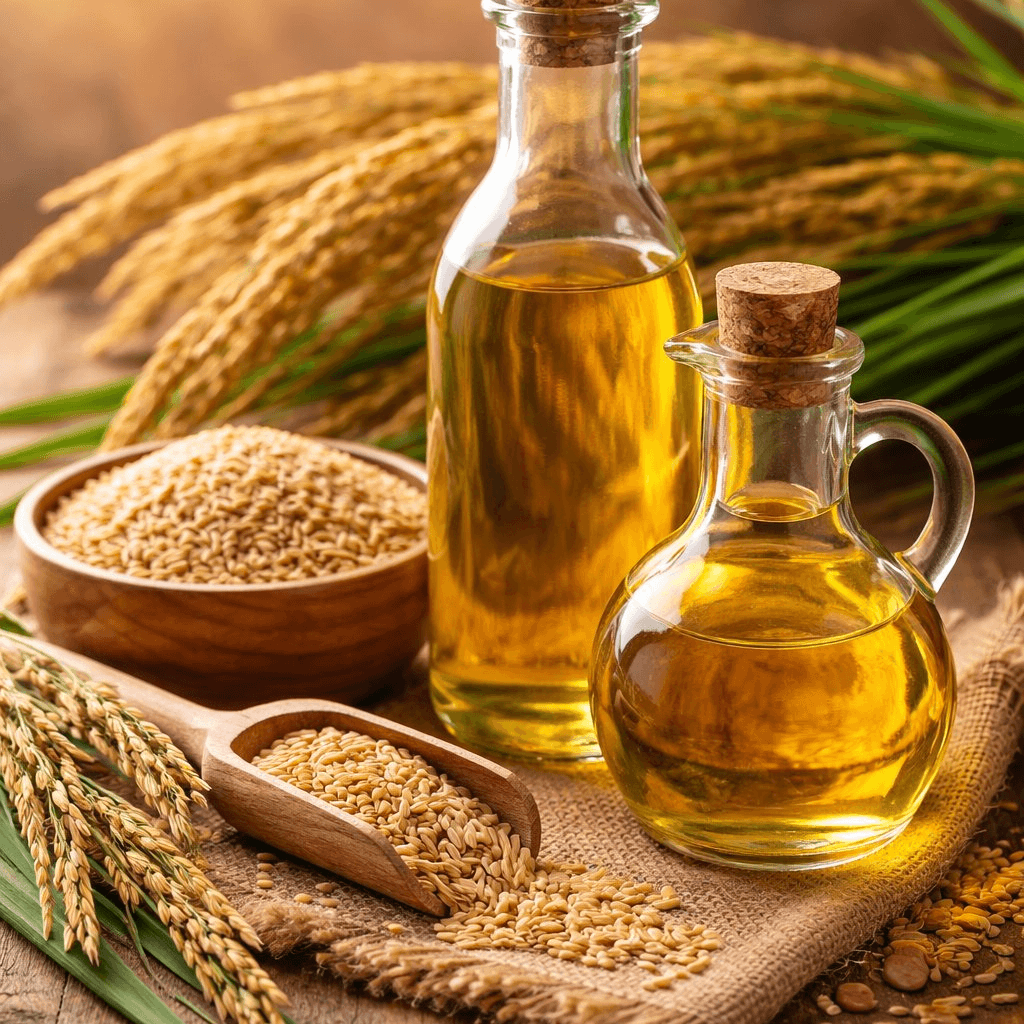
Rice bran oil is extracted from the outer layer (bran) of rice grains. It is especially popular in Asian cooking due to its mild taste and health benefits.
Key characteristics:
- Supports heart health
- High smoke point
- Mild, neutral flavor
- Contains oryzanol (a compound that may help lower cholesterol)
- Balanced fatty acid profile
3. Sunflower Oil
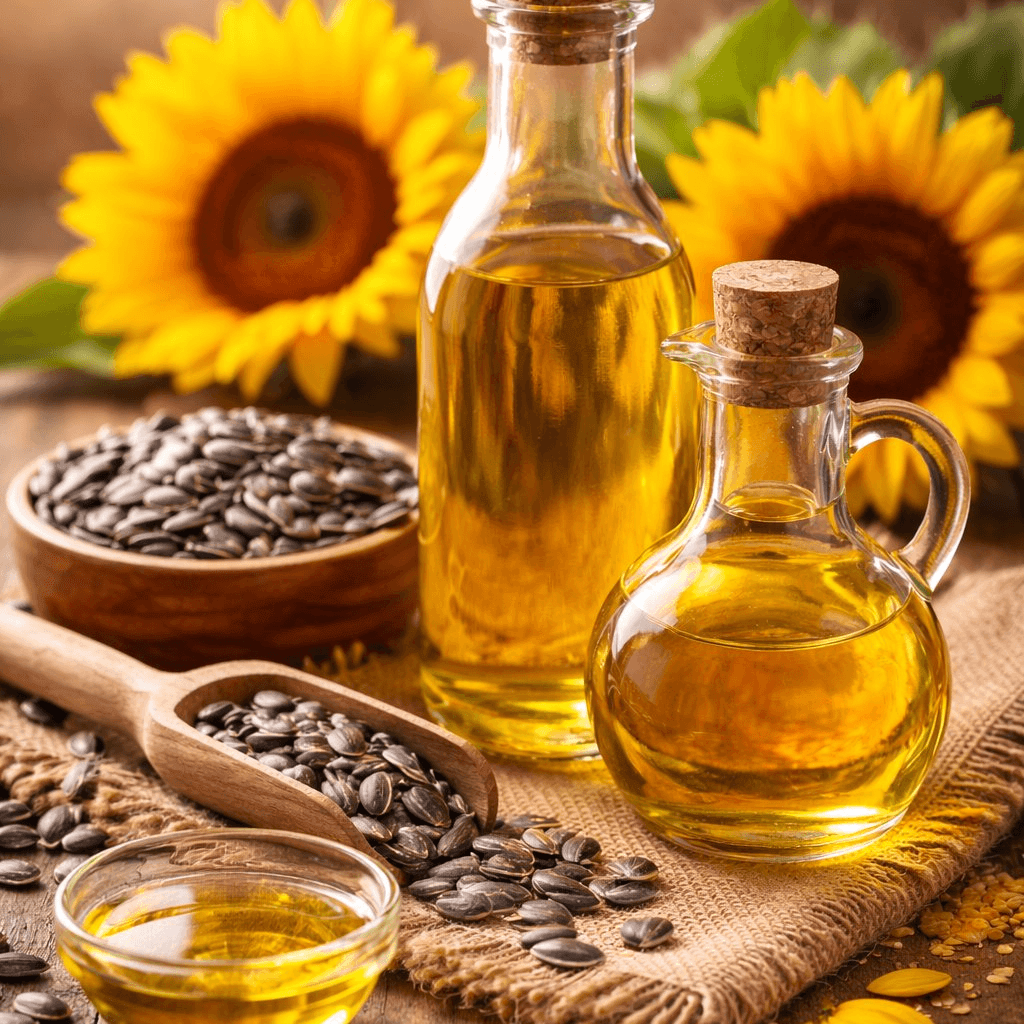
Sunflower oil is extracted from sunflower seeds and is widely used for frying and cooking due to its light taste and high smoke point.
Types of sunflower oil:
- Regular (high in omega-6)
- High-oleic (higher in monounsaturated fats, more stable)
Key characteristics:
- Versatile for frying and sautéing
- High smoke point
- Light, neutral flavor
- Rich in vitamin E
Beyond these three, there are several other cooking oils that offer a wider range of choices, including mustard oil, coconut oil, sesame oil, and more.
Which Oil Is Best for Heart Health?
Rice bran oil is often considered one of the best oils for heart health due to its balanced fat profile and presence of beneficial compounds.
1. Rice Bran Oil: Helps reduce LDL cholesterol and supports cardiovascular health due to oryzanol and balanced fats
2. Avocado Oil: Very similar fat profile to extra virgin olive oil, supports healthy cholesterol levels
3. Soybean Oil: Contains some heart-healthy ALA (omega-3), but its high omega-6 content can promote inflammation when not balanced with omega-3 intake
Soybean vs Other Cooking Oils: Cost vs Benefits Comparison
A report by the Food and Agriculture Organization shows that soybean oil remains one of the most produced and affordable vegetable oils globally, making it a practical choice for large-scale use.
| Oil Type | Price Level | Value |
| Soybean Oil | Low | Best for bulk cooking |
| Rice Bran Oil | Medium | Best all-round performance |
| Sunflower Oil | Medium | Great for high-heat versatility |
Note: Rice bran oil offers one of the best balances between health and performance for daily cooking.
What Most Home Cooks Get Wrong About Switching Oils
Many people switch oils, thinking one option will solve everything, but that’s not how cooking oils work.
Common mistakes:
- Using olive oil for deep frying
- Avoiding soybean oil completely
- Ignoring the smoke point while cooking
- Spending too much on premium oils unnecessarily
What actually works better:
- Use different oils for different purposes
- Focus on cooking method, not just health trends
- Balance cost with usage
Which Oil Should You Actually Be Cooking With?
Instead of choosing a single oil, use the one that best suits your cooking style.
Use soybean oil when:
- Cooking in large quantities
- Deep-frying foods
- You need a neutral flavor
Use rice bran oil when:
- Cooking daily meals
- Stir-frying or sautéing
- You want a balance of health and performance
Use sunflower oil when:
- Cooking at high temperatures
- Frying or sautéing
- You want a neutral taste with better heat stability
FAQ
1. Is soybean oil the same as vegetable oil?
Often, yes. Most generic vegetable oils are either pure soybean oil or a blend where soybean oil is the main component. Check the ingredient label to be sure.
2. Is soybean oil bad for health?
It is not outright harmful in small amounts. The concern is regular, high-volume consumption, particularly its high omega-6 content, and some emerging research linking excessive intake to metabolic and brain health issues.
3. Which oil is best for weight loss?
All cooking oils are calorie-dense, so portion size matters more than oil type.
4. Which oil is best for daily cooking?
Rice bran oil is one of the best choices for daily cooking due to its balanced fat profile and versatility.
5. Is sunflower oil healthy?
Yes, especially high-oleic sunflower oil. Regular sunflower oil should be consumed in moderation due to its omega-6 content.
6. Should I stop using soybean oil?
No, just use it in moderation as part of a balanced diet.
7. Can I substitute sunflower oil for rice bran oil in recipes?
Yes, in most cases. Both have neutral flavors and high smoke points, making them interchangeable for cooking.