Are you still trying to figure out which air fryer to buy, or which one actually fits your kitchen and cooking style? You’re not the only one.
Most people feel the same way when they start searching for the best air fryer in BD, as there are too many options, too many features, and no clear idea what actually matters. One model looks bigger, another looks faster, another promises healthier cooking, but it’s not obvious which one is actually worth paying for.
This guide breaks it down in simple terms so you can decide what really suits your needs before buying the air fryer.
What is an Air Fryer?
An air fryer is a countertop kitchen appliance that cooks food by circulating hot air around it. This process is commonly called Air Frying Technology.
Despite the name, it does not actually “fry” food in oil. Instead, it uses Rapid Air Technology and Hot Air Circulation to create a crispy outer layer.
In simple terms:
- It behaves like a compact convection oven
- Uses high-speed heated air instead of deep oil
- Produces similar texture to frying with much less oil
How Does an Air Fryer Work?
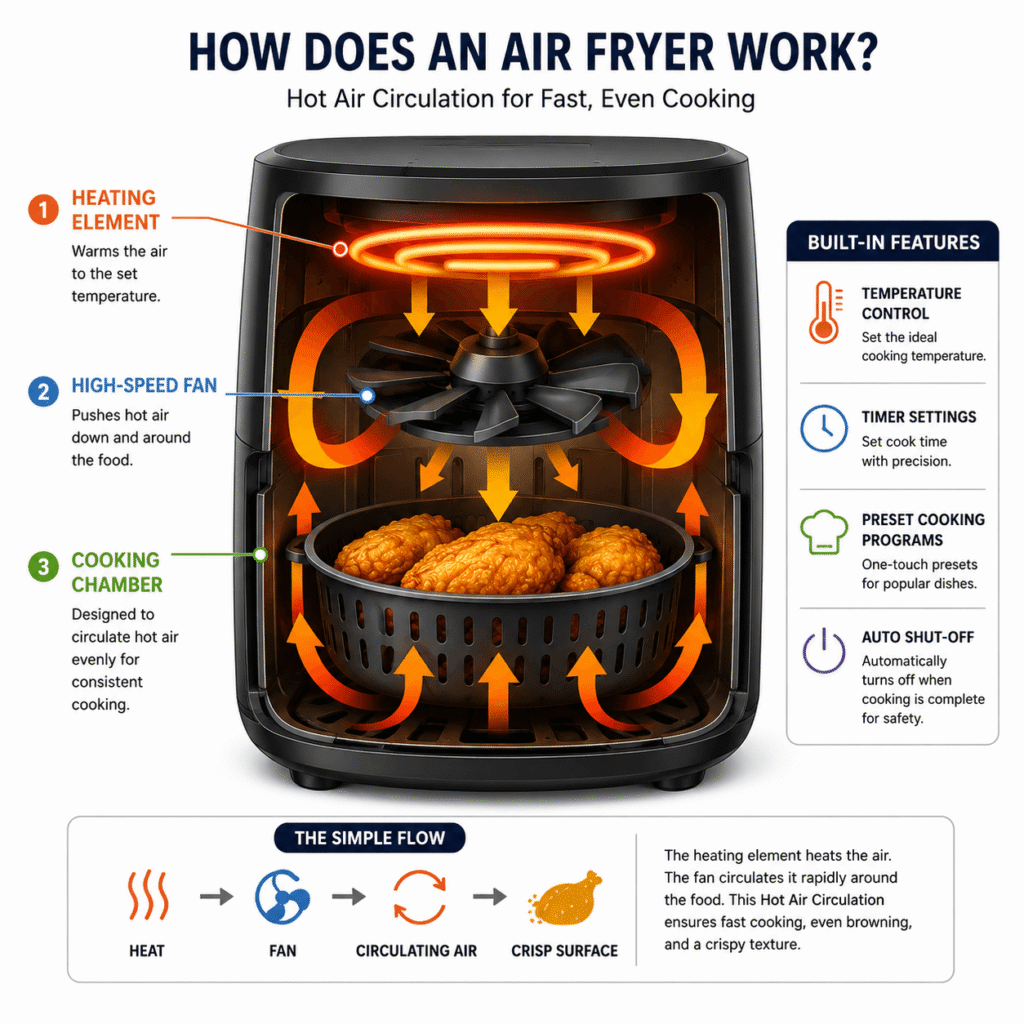
An air fryer works by circulating intense, super-heated air around your food at high speeds. It is essentially a compact, high-powered convection oven that mimics the results of deep frying by using a mechanical fan to push heat through a perforated basket, crisping food without submerging it in oil.
Inside the appliance, three core components drive the cooking process:
- The Heating Element: Located at the top of the cooking chamber, this element generates intense radiant heat, quickly warming the air to temperatures up to 200°C.
- The High-Speed Fan: Positioned directly above the heating element, this powerful fan spins rapidly, forcing the super-heated air downward into the cooking chamber.
- The Cooking Chamber: A compact, sealed environment containing a perforated basket. The shape of the chamber and the holes in the basket force the air to circulate underneath and around the food, ensuring 360-degree heat exposure.
Simple flow:
Heat → Fan → Circulating air → Crisp surface
Most modern models also include:
- Temperature Control
- Timer Settings
- Preset Cooking Programs
- Auto Shut-Off
- Note for illustration
Is an Air Fryer Good for Health? Key Benefit
The main benefits of an air fryer are less oil and fat, lower acrylamide formation, faster cooking than an oven, and easier cleanup than deep frying. Though there are many benefits too, these are-
1. Less Oil, Less Fat
An air fryer needs little to no added oil to crisp food, which directly cuts fat intake compared to deep frying.
A controlled study in the European Journal of Lipid Science and Technology found air-fried potatoes had about 70% less fat than deep-fried ones, cutting roughly 45 kcal per 100 grams.
2. Lower Acrylamide Formation
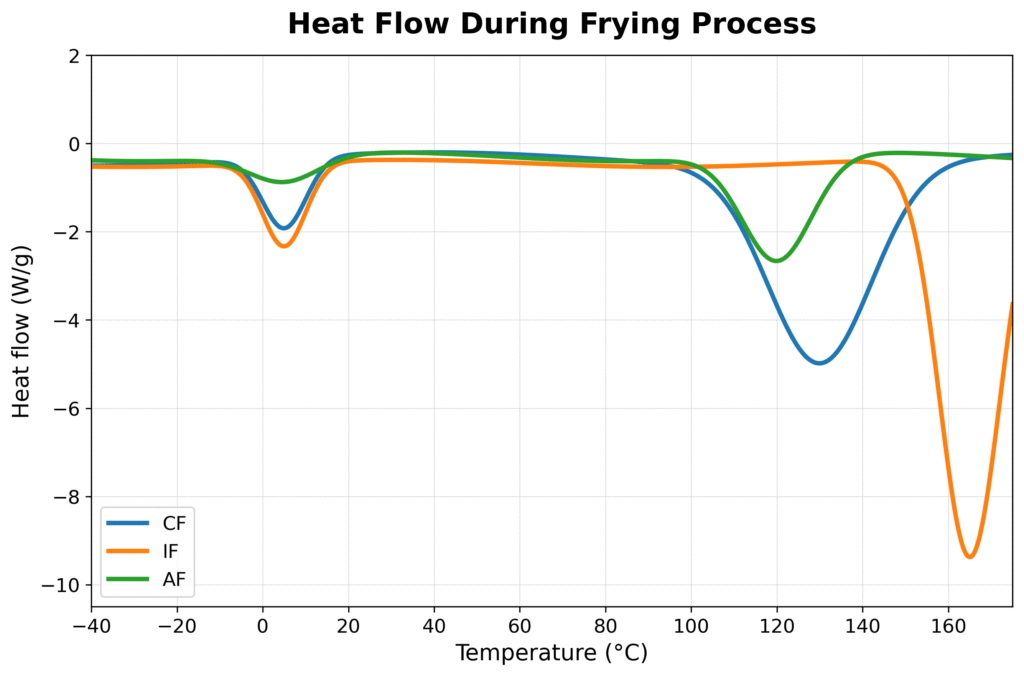
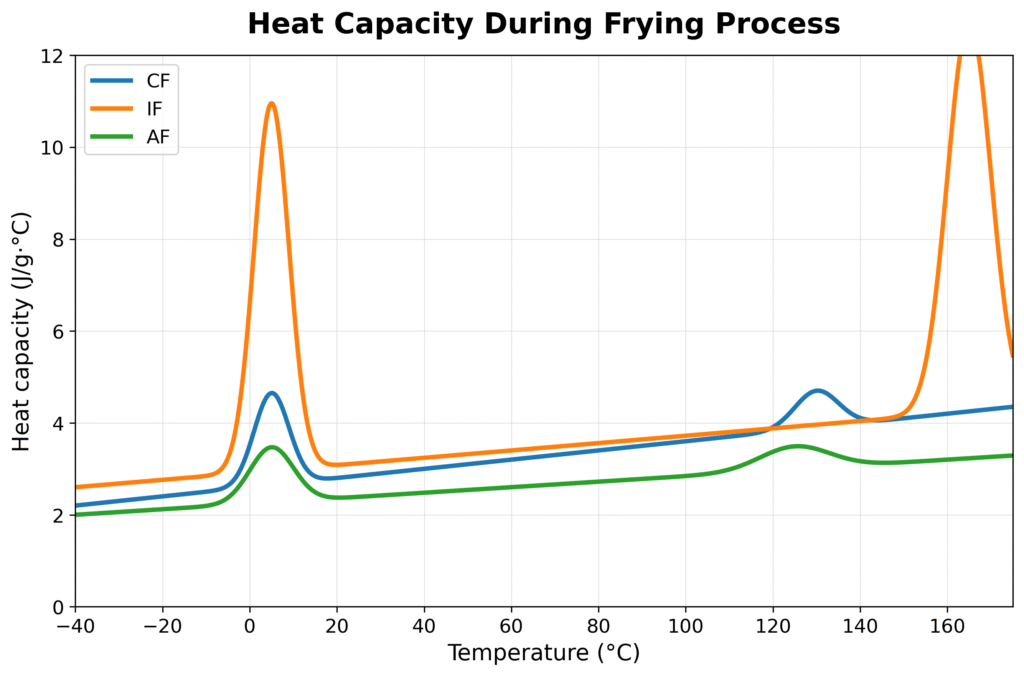
Acrylamide forms in starchy foods cooked at high heat and has been linked to health concerns with long-term exposure.
Research reviewed in a 2023 food science study found air frying can lower acrylamide formation by up to 90% compared with deep frying, depending on the food.
The thermal-analysis graphs below support this point by showing that air-fried and immersion-fried potatoes undergo different heat-related structural changes, which helps explain why cooking method can affect browning reactions and acrylamide development.
3. Faster Cooking Than a Full Oven
The cooking chamber is small and preheats in minutes, not the 10–20 minutes a conventional oven needs.
For small batches, a portion of fries, a few wings, this cuts real time off a weeknight meal without heating up the whole kitchen.
4. Easier Cleanup
Most baskets are non-stick or ceramic-coated and detach fully for washing, unlike a deep fryer’s oil-filled pot.
There’s also no leftover oil to cool, strain, and store or dispose of after cooking.
5. Better Nutrient Retention
Because food isn’t submerged in hot oil, some heat-sensitive nutrients survive the cooking process better than in deep frying.
Comparative research on frying methods found air-fried potatoes retained ascorbic acid levels at least as well as deep-fried ones, with less overall oil degradation.
What’s the Difference Between Air Fryer, Oven, and Microwave?
An air fryer crisps food fast using little to no oil, an oven handles large batches and bakes better, and a microwave is fastest for reheating and defrosting but doesn’t crisp food at all. Each suits a different job in the kitchen rather than replacing the others outright.
For the full comparison, here’s the table below:
| Feature | Air Fryer | Oven | Microwave |
| Best for | Small-batch crisping, frozen foods, reheating | Baking, roasting, large batches | Reheating, defrosting, steaming |
| Preheat time | 2–5 minutes | 10–20 minutes | None |
| Typical capacity | 2–10 quarts | 20–60 liters | 20–30 liters |
| Crisping ability | High | Medium | Low |
| Oil needed | None to minimal | Varies | None |
| Cooks whole meals for a family | Only with 6+ quart or dual-basket models | Yes | Limited |
Why Air Fryers Are Becoming So Popular?
Air fryers are becoming popular because they make everyday cooking faster and easier with less oil.
Air fryer demand is no longer just a trend it’s showing real market growth. Global sales have risen from about USD 753 million in 2020 to around USD 1.15 billion by 2026, according to a 2024 food science review.
In Bangladesh, the shift is visible in stores. Earlier, there were few options, but now brands like Philips, Walton, Miyako, Singer, and Bajaj are widely available in different sizes and price ranges.
What Are the Popular Brands of Air Fryer?
Popular air fryer brands right now include Miyako, Walton, and Singer among local options, along with Philips, Bajaj, and Hitachi internationally. Here’s the total breakdown:
1. Miyako
One of the most widely available deshi brands, known for affordable pricing and decent build quality across both manual and digital models. A safe starting point if you’re buying your first air fryer.
2. Walton
A local favorite for home appliances in general, and their air fryers follow the same pattern: solid basics, competitive pricing, and easy access to local service and parts.
3. Singer
Known more broadly for home appliances, Singer’s air fryer lineup tends to focus on straightforward, no-fuss models that get the job done without extra frills.
4. Vision
Another familiar local name, popular for offering a wide range of kitchen appliances, with air fryers positioned as an accessible mid-range option.
5. Philips
The most recognized international brand in this category, known for consistent build quality, reliable presets, and better long-term durability — usually at a higher price than local brands.
6. Bajaj
A well-known South Asian appliance brand is often chosen for compact, budget-friendly models that suit smaller households.
7. Hitachi
Known more for premium build and design, Hitachi tends to appeal to buyers who want a slightly more polished, higher-end kitchen appliance.
8. Instant Pot
Best known for its multi-cookers, Instant Pot also offers versatile air fryers. Many models combine air frying with roasting, baking, and dehydrating, making them suitable for people who want more than a single-purpose appliance.
What Are the Different Types of Air Fryers?
There are four main types of air fryers: basket-style, dual-basket, oven-style, and lid-style attachments. They differ mainly in capacity, versatility, and how much counter space they need.
1. Basket-Style (Drawer) Air Fryers
The most common design. A pull-out basket sits inside a compact housing, with the heating element and fan mounted above.
| Pros | Cons |
| Compact, fits small counters | Limited to one cooking zone at a time |
| Easy to clean, removable basket | Smaller capacity than oven-style units |
| Available at nearly every price point | Fewer functions than larger models |
2. Dual-Basket / Dual-Zone Air Fryers
Two independent baskets, each with its own heating element and controls, letting you cook two different foods at two different temperatures at the same time.
| Pros | Cons |
| Cooks two dishes simultaneously | Takes up more counter space than a single basket |
| Useful for a protein and a side together | Higher price than standard basket models |
| Each zone has independent timing | Two baskets to clean instead of one |
3. Oven-Style Air Fryers
Larger units shaped like a small toaster oven, with racks instead of a basket, typically adding bake, toast, rotisserie, and dehydrate functions.
| Pros | Cons |
| Most versatile fryer, it can bakes, roasts, toasts, air fries | Largest counter footprint of the four types |
| Higher capacity for bigger families | Slower to preheat than a basket model |
| Racks allow multiple layers of food | Airflow is less concentrated, so crisping can be less even |
4. Lid-Style / Multi-Cooker Attachments
An air-fry lid that fits onto an existing pressure cooker or pot instead of a standalone unit.
| Pros | Cons |
| Cheaper if you already own the base pot | Airflow is less consistent than a dedicated unit |
| Saves counter space, no separate appliance | Limited to pots the lid is compatible with |
| Adds air-fry function to an existing cooker | Usually smaller usable capacity |
Air Fryer Size Guide: How Many Liters or Quarts Do You Need?
Match capacity to how many people you regularly cook for, roughly 2–3 quarts for 1–2 people, 5–6 quarts for a family of 3–4, and 7+ quarts or dual-basket for 5 or more.
Here’s the full breakdown:
| Capacity | Best for |
| 2–3 liters | 1–2 people |
| 4–5 liters | 2–3 people |
| 5–6 liters | 3–4 people |
| 7+ liters or dual-basket | 5 or more people |
What Factors Should You Check Before Buying an Air Fryer?
The right air fryer matches your cooking habits, household size, and budget without paying for features you’ll never use. Here’s what to check, in order.
1. Cooking Needs and Usage Frequency
Think about what you’ll actually cook most days; reheating snacks needs a basic model, while roasting, baking, or dehydrating needs more functions.
Daily use calls for durability and easy cleaning over extra features you’ll rarely touch.
2. Capacity: Finding the Right Fit for Your Family
- Small (2L–3L) — Bachelors, students, or couples. Fits one chicken breast or a plate of fries.
- Medium (4L–5.5L) — The sweet spot for a family of four. Fits a small whole chicken or enough shingaras for evening snacks.
- Large (6L+) — Big families or frequent guests for dawat.
3. Air Fryer Type
Choose air fryer which suits you best. Basket-style units are quick and simple for daily frying fries, chicken, veggies.
Oven-style models add racks and more visibility, better for baking or cooking multiple items. Dual-chamber units cook two foods at different settings at once.
4. Wattage and the Electricity Bill
Most models run 1,200W–1,800W. Higher wattage cooks faster, which often offsets the extra power draw since the unit runs for less time.
5. Temperature Range and Control
Look for a range of roughly 80°C to 200°C. Lower temperatures suit dehydrating or keeping food warm; higher ones give a golden, crisp finish.
6. Manual vs Digital Controls
Manual knobs are durable and easy to repair locally. Digital panels offer presets and more precision but can be sensitive to heat and humidity. Go manual for reliability, digital for precision.
7. Basket Material and Build Quality
Choose a PTFE-free or ceramic-coated non-stick basket that won’t flake with regular use. A chipped coating is a health concern, not just a cosmetic one.
8. Safety Features to Check
Auto shut-off and overheat protection matter most in busy kitchens. Cool-touch handles and a stable base help prevent accidents during daily use.
9. Ease of Cleaning
Detachable, dishwasher-safe baskets save real time over hand-washing daily. A design that keeps grease contained is worth more than looks.
10. Warranty and After-Sales Support
Voltage fluctuations can shorten an appliance’s life, so local service access matters. Walton, Singer, and Vision have service centers across the country.
For international brands like Philips, buy through an authorized retailer for a valid local warranty.
11. Budget
Basic manual models start around BDT 3,000–8,000, fine for occasional use. Mid-range digital models with presets run BDT 8,000–14,000, suited to daily family cooking.
Premium models with dual baskets or smart features start from roughly BDT 14,000 upward. Don’t pay for features you won’t use, but never compromise on capacity, safety, and power.
Digital vs Manual Air Fryer: Which Should You Choose?
Manual air fryers are better for reliability and easy repairs; digital models are better for precision and preset convenience. Here’s the comparison:
| Factor | Manual Air Fryer | Digital Air Fryer |
| Controls | Rotary dial for time and temperature | Touchscreen or button panel with presets |
| Precision | Approximate, set by hand | Exact time/temperature settings |
| Ease of repair | Simple, widely serviceable locally | More complex electronics, fewer local repair options |
| Sensitivity | Not affected by heat or humidity | Touchscreens can be sensitive to steam and moisture |
| Learning curve | Minimal | Slightly higher, but easier once learned |
| Best for | Elderly users, simple daily cooking | Users who want presets and repeatable results |
| Typical price | Lower | Higher |
What Features Should You Look for in a Digital Air Fryer?
Look for preset cooking programs, precise temperature control, auto shut-off, a dishwasher-safe basket, and depending on your needs and few more features as well, these are-
1. Touchscreen display or buttons
Digital air fryers use either a touchscreen or physical buttons for temperature control and timer settings. Touchscreens usually pack in more presets; buttons tend to be more durable with wet or greasy hands.
2. Dual basket cooking systems
Two independent baskets, each with its own temperature control, let you cook two dishes at once instead of running the fryer twice.
3. Dehydrate, bake, grill functions
Beyond basic air frying, many mid-range and oven-style models add dehydrate, bake, and grill settings, turning one appliance into several.
4. Preset cooking programs
One-touch settings tuned for foods like fries, wings, or fish; convenient, but not a substitute for checking food partway through.
5. Auto shut-off
Stops heating once the timer ends, reducing the chance of overheating from an unattended unit.
6. Dishwasher-safe basket
Saves time, but check whether this applies to the tray only or the full basket assembly.
7. Viewing window
Lets you check food without opening the basket and losing heat, a small but genuinely useful convenience feature.
8. Temperature range
Most home units run between roughly 80°C and 200°C (176°F–400°F); a wider range gives more flexibility for dehydrating at the low end and searing at the high end.
What Can You Cook in an Air Fryer? (picture will add)
You can cook almost anything that benefits from a dry, crisp exterior, frozen foods, proteins, vegetables, and even local snacks, though it isn’t suited to wet-batter dishes or anything that needs to be submerged in oil, like traditional deep-fried pakoras in a thick liquid batter.
- Frozen foods: Frozen French fries in an air fryer, nuggets, hot dogs, and samosas cook quickly with no added oil needed.
- Proteins: Air fryer chicken wings and drumsticks come out crisp-skinned, and air fryer fish recipes like salmon or pomfret work well since the hot air seals in moisture while crisping the skin.
- Vegetables: Broccoli, cauliflower, and potatoes roast in a fraction of the time a normal oven takes.
- Local snacks: Traditional items like beguni, alur chop, and shami kebabs air-fry well with a light brushing of oil instead of deep frying.
- Other uses: It also handles reheated leftovers, a simple air fryer pizza recipe, small baked goods like cakes or muffins in an oven-safe dish, and toast, though toast quality is limited compared to a dedicated toaster.
What Temperature and Time Should You Use for Air Frying? (Cooking Chart)
Cooking time and temperature vary by food type, but most items fall between 180°C–200°C and 10–25 minutes. Here’s the full breakdown below:
| Food | Temperature | Approx. Time |
| Frozen French fries | 200°C | 15–18 min |
| Chicken wings | 190°C | 20–25 min |
| Fish fillet | 180°C | 10–12 min |
| Vegetables (mixed, chopped) | 190°C | 12–15 min |
| Frozen nuggets/tenders | 200°C | 10–12 min |
| Whole small potatoes | 200°C | 25–30 min |
Note: Times vary by wattage, food thickness, and how full the basket is. Treat this as a starting point, not an exact rule, and check the food a few minutes before the listed time on first use.
How to Use an Air Fryer: Best Tips and Tricks
The best air fryer tips are simple: don’t overcrowd the basket, shake food halfway, use minimal oil, and dry wet food before cooking. Here are the details:
- Shake or flip food halfway through for even browning
- Cook in a single layer, don’t overcrowd the basket
- Use a light oil spray instead of pouring oil
- Pat wet or marinated food dry before air frying
- Preheat the basket for a few minutes on first use
- Check the food a few minutes early the first time you cook something new
What Mistakes Should You Avoid When Using an Air Fryer?
The most common mistakes are overcrowding the basket, skipping preheat, using the wrong oil sprays, and ignoring the fill line. Here’s what to watch for:
1. Overcrowding the basket
Packing too much food in a block of airflow leaves food soggy instead of crisp. Air needs space to circulate. Every piece of food stacked on top of other food just steams in its own moisture instead of browning.
2. Skipping preheat
Some models need a short preheat to reach cooking temperature before food goes in. Skipping it can leave the outside undercooked while the inside is fine, especially with thicker cuts like chicken drumsticks.
3. Using aerosol cooking sprays
Propellant-based sprays often contain lecithin or other additives that build up on non-stick coatings over repeated use, gradually wearing them down. Brushing on a thin layer of oil instead avoids this and works just as well for browning.
4. Ignoring the fill line
Manufacturers set a max fill line because overfilling doesn’t just affect crisping it also blocks the fan’s airflow path, which can strain the motor over time and cook food unevenly.
5. Not shaking or flipping food
Since air fryers heat food from all directions, but the fan pushes air more strongly from one side, foods like fries and wings brown unevenly if left untouched. A quick shake or flip halfway through fixes this in seconds.
How to Clean an Air Fryer?
Cleaning an air fryer is simple: unplug it, let it cool, soak the basket rather than scrub it, and wipe down the heating element regularly. Here’s the full process:
- Cool Down: Always unplug the machine and let it cool completely before cleaning.
- Soak, Don’t Scrub: Fill the basket with warm water and mild dish soap. Let it sit for 10 minutes to loosen baked-on grease.
- Soft Sponge Only: Use the soft side of a sponge. Never use steel wool or abrasive scrubbing pads, which strip away the non-stick surface.
- Wipe the Element: Periodically turn the cooled machine upside down and wipe the heating element and coil with a damp cloth to remove accumulated oil splatters.
How Do You Maintain an Air Fryer for Longevity?
Regular maintenance mainly means keeping the basket coating intact, the vents clear, and the unit fully dry between uses. The full maintenance guide is below:
- Check the non-stick coating regularly for peeling or scratches
- Keep air vents free of dust and grease buildup
- Store the unit fully dry to avoid odor buildup
- Avoid stacking heavy items on top of the unit
- Replace the basket if the coating wears down significantly
What Accessories Work Best With an Air Fryer?
An air fryer accessory kit expands what your machine can do, and a few pieces cover most everyday needs. Useful options include:
- Silicone Liners: Reusable mats that protect your basket surface and make washing up easier.
- Metal Racks/Skewers: Create a second tier inside your basket to double your usable cooking surface for items like kebabs.
- Cake Barrel / Pizza Pan: Small non-stick pans that fit inside your basket, allowing you to bake small cakes or individual pizzas.
- Grill/Ribbed Pan: Adds visible grill marks and helps fat drain away from foods like kebabs or sliced vegetables.
- Silicone Cupcake Molds: Let you bake individual portions of cake, muffins, or egg bites without needing a full-size pan.
What Mistakes Should You Avoid When Using an Air Fryer?
The most common mistakes are overcrowding the basket, skipping preheat, using the wrong oil sprays, and ignoring the fill line. Here’s what to watch for:
Myth 1: Air fryers actually fry food
Reality: They don’t use oil submersion at all, the name refers to the crisping effect of hot air, not a frying process in the traditional sense.
Myth 2: Bigger is always better
Reality: A larger capacity that’s mostly empty during regular cooking wastes counter space and, on some models, uses more power to heat an oversized chamber than a correctly-sized one would.
Myth 3: Non-stick means unsafe
Reality: Not all non-stick coatings use PFAS-based compounds; many current models are marketed specifically as PFAS-free, and checking this on the spec sheet directly addresses the concern.
Myth 4: You can make popcorn in an air fryer
Reality: This is highly discouraged. Most popcorn kernels don’t reach a high enough temperature fast enough to pop efficiently, and the internal fan can blow unpopped kernels directly into the heating element, creating a fire hazard.
Myth 5: You don’t need any oil at all
Reality: While frozen foods which are usually pre-fried cook fine without oil, fresh raw ingredients like potatoes or chicken breasts need a light coating of oil to crisp properly. Without it, they end up dry, chalky, and pale.
Do You Really Need an Air Fryer?
Not every kitchen needs one it depends on how you cook, not how popular the appliance is. Here’s a straightforward way to check where you fall.
It’s a good fit if you:
- Cook on a tight schedule and want a “start it and walk away” method for dinner
- Are trying to cut down on oil without giving up crispy food
- Live in a small apartment or flat with no room for a full-sized oven
- Regularly reheat leftovers and want them crisp again instead of soggy from the microwave
It’s probably not worth it if you:
- Already own a convection oven the cooking mechanism is essentially the same, just in a bigger box
- Genuinely prefer the taste and texture of traditional deep-fried food
- Have very limited counter space and no patience for one more appliance taking it up
Conclusion
The right air fryer isn’t the biggest or the flashiest one, it’s the one that matches your household size, cooking habits, and budget.
Ready to find yours? Get the best air fryers on cartup and compare capacity, price, and brand side by side before you buy.
FAQ
1. Do air fryers really save money on oil?
Yes, measurably! Published research shows oil content in air-fried food running around 70–90% lower than deep-fried equivalents, depending on the food and method compared.
2. Is a digital or manual air fryer better?
Digital controls give more precise, repeatable timing and temperature; manual dials are simpler and cheaper but less exact on in-between settings.
3. Can one air fryer replace an oven?
Not fully. It replaces an oven well for crisping, reheating, and small-batch cooking, but a full oven still handles large trays and big roasts better.
4. Do air fryers consume a lot of electricity?
Although air fryers have relatively high wattage, they cook much faster than a conventional oven. Since the cooking time is shorter, most users notice little to no significant increase in their electricity bill.
5. What is air fry vs deep fry?
Deep frying submerges food in hot oil; air frying circulates hot air around food with little to no oil. Air frying uses far less fat, though deep frying can give a slightly different texture and taste some people prefer.
6. Do I need to preheat my air fryer before cooking?
For most foods, a short 2–3 minute preheat helps food cook and crisp evenly, especially thicker items like chicken. Thin or frozen foods can often go in without preheating.
7. Why is there smoke coming out of my air fryer while cooking?
Usually leftover oil or food residue burning on the heating element or in the basket. Clean the basket and tray after each use, and avoid adding excess oil, to prevent this.