In recent years, online marketplaces in Bangladesh have transformed how businesses and consumers buy and sell products. With increasing internet penetration and smartphone usage, e-commerce platforms have become a vital part of the economy.
Whether you are a business owner or an individual seller, understanding the types of online marketplaces and their features can help you expand your reach and increase sales.
Key Takeaways
- B2B, B2C, P2P, and C2C are the main types of online marketplaces in Bangladesh.
- Secure payments, user friendly interface, seller tools, reviews, and support are must have marketplace features.
- AI, social commerce, and quick delivery are driving the latest marketplace trends.
- Choosing the right platform and optimizing listings is crucial for maximizing sales and growth.
What is an Online Marketplace?
An online marketplace is a digital platform where multiple sellers can showcase their products and services to buyers. Unlike traditional e-commerce stores, marketplaces allow numerous vendors to operate under one platform, offering a wide variety of products and competitive prices.
According to recent data, Bangladesh’s e-commerce market is growing and expected to reach US $9.8 billion by 2028.
What are the Types of Online Marketplaces?
Online marketplaces in Bangladesh include B2B for business-to-business trade, B2C for businesses selling to consumers, P2P for peer-to-peer sales, and C2C for consumers selling to other consumers.
i) B2B Marketplaces in Bangladesh
A B2B (business-to-business) marketplace is a digital platform that connects multiple manufacturers, wholesalers, and suppliers with business buyers, facilitating high-volume, professional transactions.
1. PriyoShop (Best B2B Wholesale Platform)
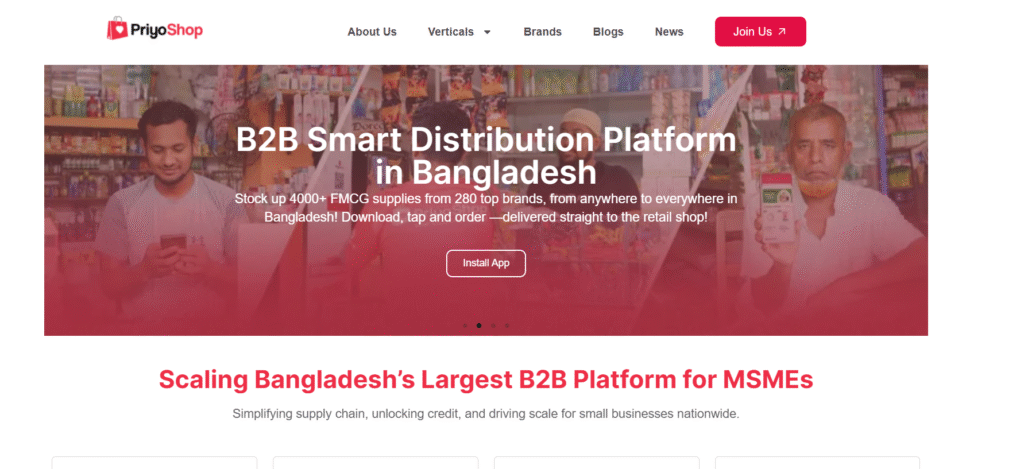
PriyoShop is a comprehensive B2B platform designed specifically for small and medium retailers in Bangladesh to source products directly from wholesalers and manufacturers.
Key Features:
- Direct connection between retailers and verified wholesalers
- Real-time inventory tracking
- Dedicated logistics support for bulk deliveries
- Category-specific product sourcing across electronics, fashion, and FMCG
Why it’s best for:
Small and medium retail shop owners are looking to streamline their procurement process with reliable wholesale suppliers.
2. Mokam (A Concern of ShopUp)
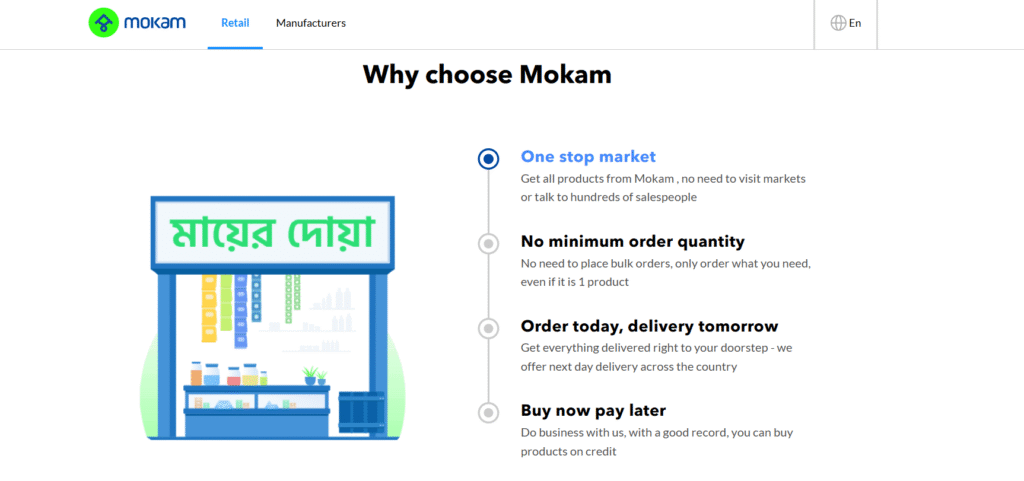
Mokam is a leading B2B digital commerce platform in Bangladesh operated by ShopUp, designed to connect manufacturers and large distributors directly with small retail stores across the country.
Key Features:
- Direct sourcing from FMCG brands and authorized distributors
- Data-driven supply chain and demand forecasting
- Integrated logistics and last-mile delivery support
- Credit and financing solutions for small retailers
Why it’s best for:
Retailers, FMCG brands, and distributors are looking for a scalable B2B platform with technology-driven supply chain efficiency and access to thousands of neighborhood shops.
3. Bikroy (Best Option for Buy & Sell Products Online)
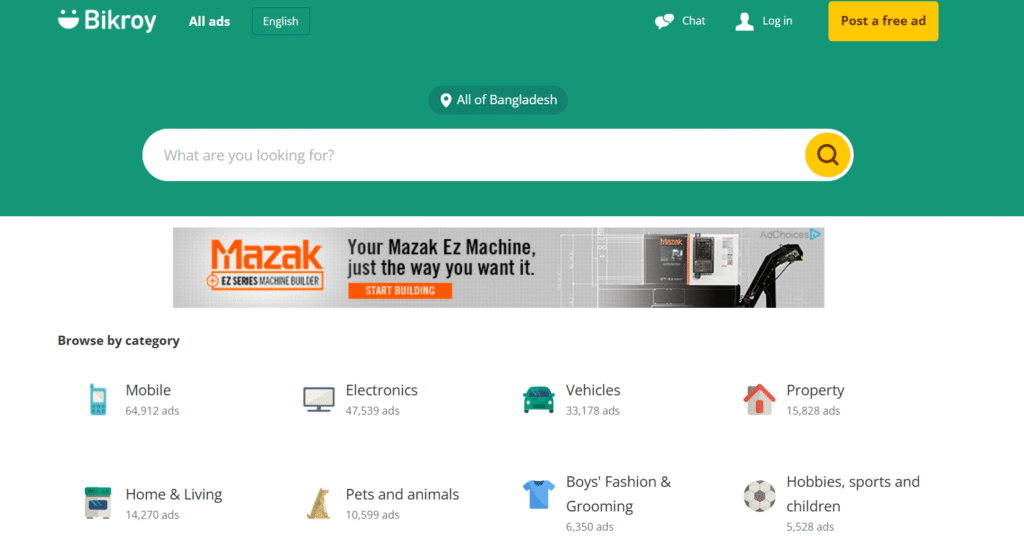
Bikroy.com is a hybrid marketplace that operates as both a B2B and C2C platform; however, a significant portion of its activity is driven by B2B transactions, particularly among small businesses, wholesalers, manufacturers, and service providers across Bangladesh.
Key Features:
- Strong B2B presence in categories like industrial machinery, wholesale products, raw materials, commercial property, and business services
- High visibility for bulk sellers
- Direct buyer-seller communication without intermediaries
Why it’s best for:
Small businesses, wholesalers, manufacturers, and service providers looking for cost-effective B2B exposure and direct lead generation, with added flexibility to reach B2C buyers if needed.
II) B2C Marketplaces in Bangladesh
A B2C (Business to Consumer) marketplace is an online platform that connects multiple third-party sellers directly with individual consumers, facilitating transactions for products or services in a single, centralized location.
1. Daraz ( Good for Great Deals)
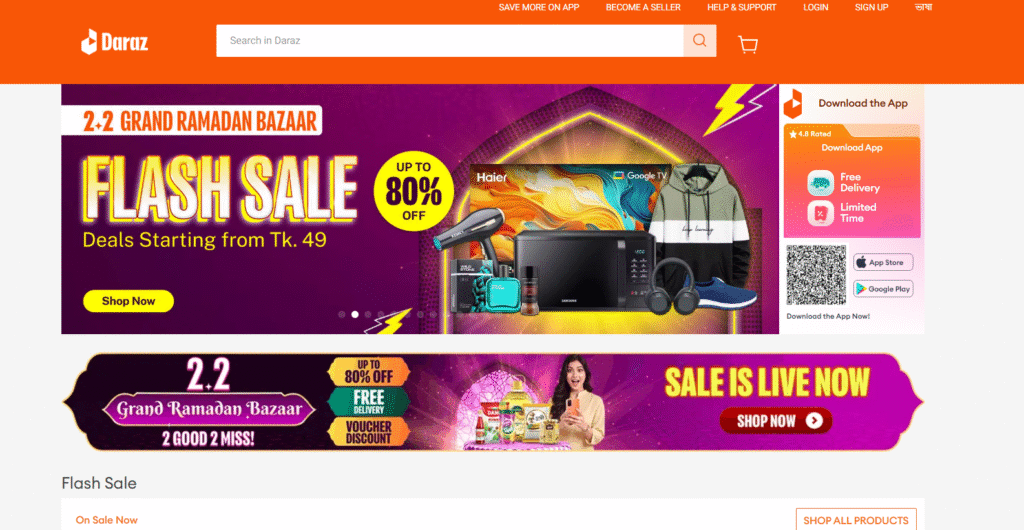
Daraz is the largest B2C marketplace in Bangladesh, offering products across fashion, electronics, home appliances, beauty, and more.
Key Features:
- Largest product selection with 10+ million items
- DarazMall for authentic branded products with guarantees
- Multiple payment options, including cash on delivery and digital wallets
- Daraz campaigns and flash sales with significant discounts
Why it’s best for: Established brands and sellers targeting the widest consumer audience in Bangladesh.
2. Cartup (Best Online Marketplace- All in One)
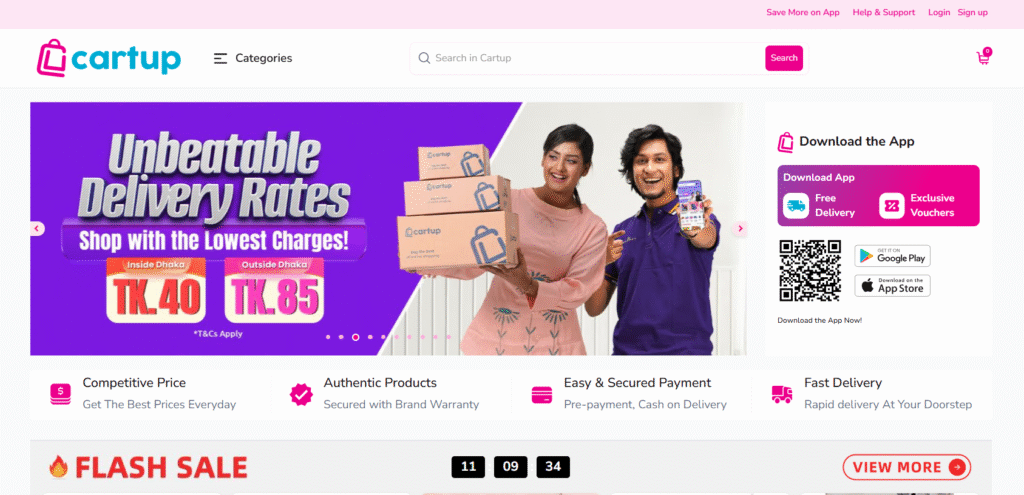
Cartup is a B2C marketplace focusing on quality, authentic products, fast delivery, and affordable prices to differentiate itself in the competitive e-commerce landscape.
Key Features:
- An extensive category product range, such as electronics, fashion, groceries, home appliances, and more.
- Nationwide fast delivery, including next-day delivery options through “Cartup Picks” and “Cartup Fast”.
- Secure payment options support COD, bank cards, and major MFS (bKash, Nagad, Rocket, Upay).
- Offers a 7-day return policy and dedicated customer support
Why it’s best for: Quality-conscious sellers and brands targeting premium customer segments.
3. Pickaboo (Best Choice for Electronic Items)
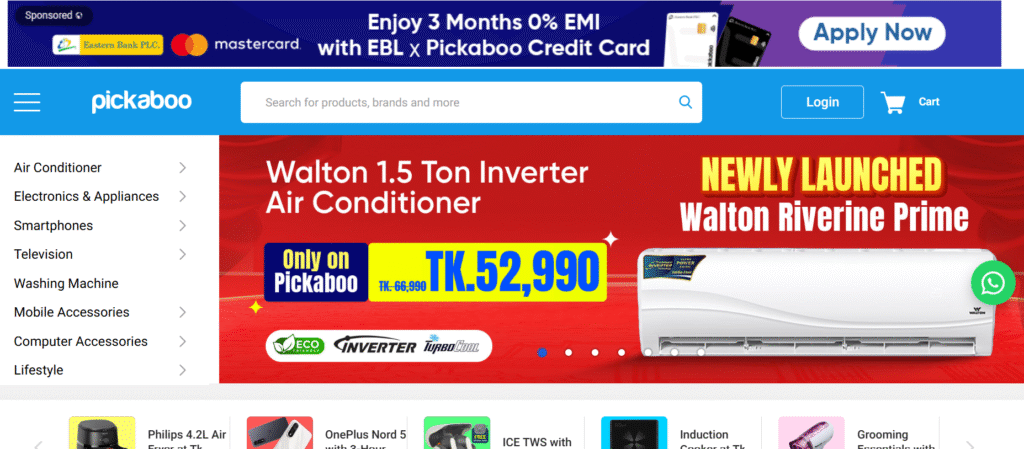
Pickaboo specializes in electronics, gadgets, and technology products, establishing itself as Bangladesh’s leading tech-focused B2C marketplace.
Key Features:
- Exclusive focus on electronics and technology products
- Official brand partnerships ensure genuine products
- Extended warranty and after-sales service
- EMI facilities for expensive electronics
Why it’s best for: Electronics brands and tech sellers looking for a specialized platform with a large customer range.
4. Chaldal ( Grocery Shopping within Budget)
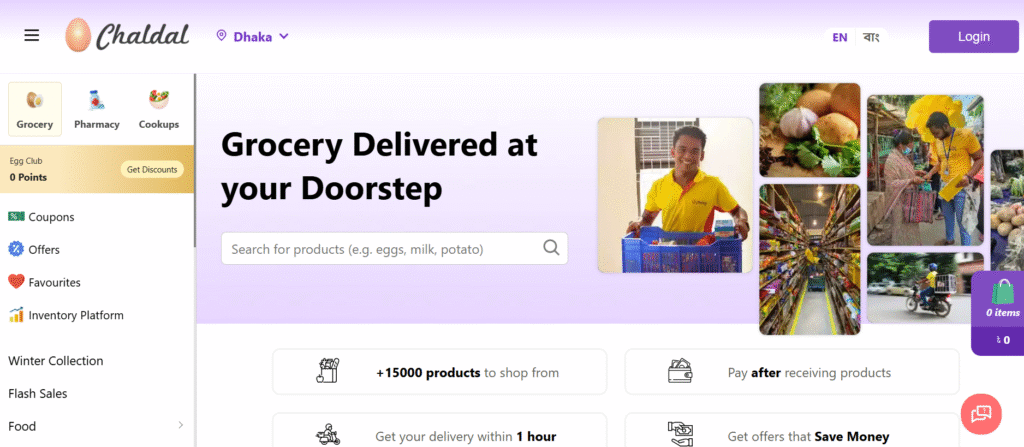
Chaldal is an online grocery marketplace in Bangladesh, offering fresh produce, daily essentials, and household items with same-day delivery.
Key Features:
- Same day and scheduled delivery slots
- Fresh produce with quality guarantees
- Own inventory model ensuring product quality
- User-friendly mobile app with quick reordering
Why it’s best for: Grocery brands and FMCG companies targeting urban consumers who are looking for convenience.
5. Othoba ( Good for Deals and discounts on Various Items)
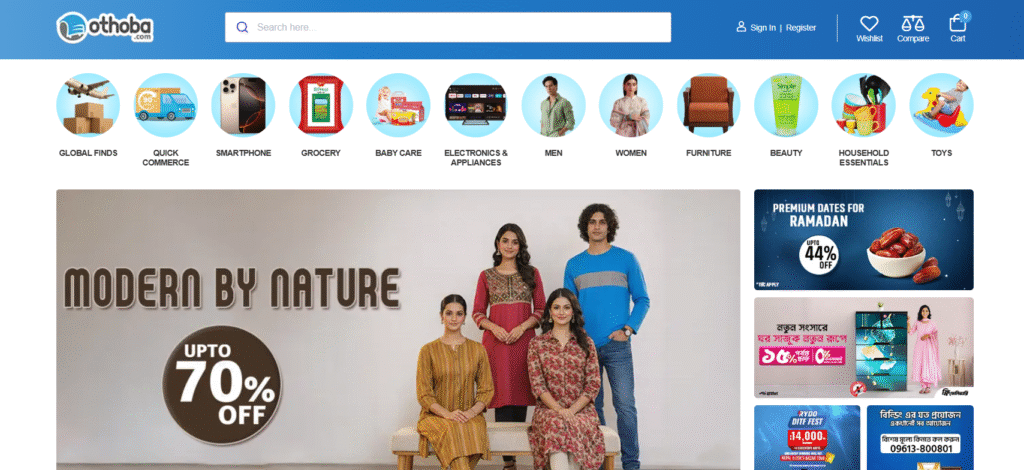
Othoba is a growing B2C marketplace offering a wide selection of products with a focus on competitive pricing and customer satisfaction.
Key Features:
- Competitive pricing with regular promotional offers
- A diverse product range from fashion to electronics
- Flexible payment methods, including installments
Why it’s best for: Value-driven sellers targeting price-conscious consumers across Bangladesh.
III) P2P Marketplace
A Peer To Peer (P2P) marketplace is an online platform that enables individuals to buy, sell, or rent goods and services directly with one another, rather than through a traditional company to consumer model.
1. Facebook Marketplace
Facebook Marketplace has become the dominant P2P platform in Bangladesh, leveraging the massive user base of Facebook to enable local buying, selling, and service exchanges.
- Integrated with user’s Facebook profile for trust verification
- Location based listings for local transactions
- Free listing without commission fees
- Direct messaging for negotiations
- Community groups for specialized interests
4. C2C Marketplaces
C2C (Consumer-to-Consumer) marketplaces enable individuals to sell products directly to other consumers, typically used or second-hand items. These platforms democratize commerce by allowing anyone to become a seller, fostering a circular economy where products are reused and recycled rather than discarded.
What’s the Difference between B2B, B2C, P2C, and C2C Online Marketplaces?
B2B defines businesses to businesses, B2C means businesses to consumers, P2P means individuals to individuals, and C2C connects consumers to other consumers. Here are the basic differences among them-
| Aspect | B2B | B2C | P2P | C2C |
| Seller Type | – Businesses – Manufacturer – Wholesalers | – Businesses – Brands – Retailers | – Individuals – Service providers | Individual consumers |
| Transaction Type | Bulk/Wholesale | Retail | Peer-to-Peer | Used/Second-hand |
| Purchase Volume | High quantity | Single/Small quantity | Varies | Single items |
| Price Range | Wholesale pricing | Retail pricing | Negotiable | Usually lower |
| Best For | Businesses sourcing inventory | Consumers shopping online | Direct peer transactions | Selling or buying used items |
What are the 5 Must-Have Online Marketplace Features?
There are many features that define a successful online marketplace, such as secure transactions, a smooth user experience, and reliable platform support. Among these, the following are the top five must-have features.
1. Secure Payment Gateway: A robust and secure payment system supporting multiple payment methods including cards, mobile banking, and cash on delivery, is essential for customer trust.
2. User Friendly Interface: Intuitive navigation, fast loading speeds, and mobile responsiveness are critical for customer retention and conversion rates.
3. Seller Dashboard and Analytics: Comprehensive tools for sellers to manage inventory, track sales, analyze performance metrics, and communicate with customers are vital.
4. Review and Rating System: Transparent customer reviews and seller ratings build trust and credibility within the marketplace ecosystem.
5. Customer Support System: Multi-channel support, including live chat, email, and phone, and ensures prompt resolution of customer queries and complaints.
What are the Latest Online Marketplace Trends to Follow?
Online marketplaces are rapidly evolving due to changing consumer behavior and technology advancements. The following trends are shaping the future of digital commerce:
1. Social Commerce Integration: Marketplaces are increasingly integrating with social media platforms, enabling direct shopping through Instagram, Facebook, and TikTok.
2. AI-Powered Personalization: Artificial intelligence and machine learning algorithms provide personalized product recommendations, dynamic pricing, and customized shopping experiences.
3. Voice Commerce: Voice activated shopping through smart speakers and voice assistants is gaining traction, offering hands-free convenience.
4. Sustainable and Ethical Shopping: Growing consumer awareness about environmental impact is driving demand for eco-friendly products and sustainable business practices.
5. Augmented Reality (AR): AR technology allows customers to virtually try products before purchasing, particularly in fashion, furniture, and cosmetics categories.
6. Quick Commerce and Instant Delivery: The rise of quick commerce platforms offering delivery within hours is reshaping consumer expectations.
Why Should You Utilize Marketplaces to Sell Online?
Selling through online marketplaces offers businesses and individual sellers a fast and efficient way to reach customers without building everything from scratch. Key benefits include:
- Instant access to an established customer base
- Lower initial investment required
- Built in trust and credibility
- Technical infrastructure is fully managed
- Free marketing and traffic
- Integrated logistics solutions
- Valuable analytics and insights
- Competitive learning environment
- Multiple payment options enabled
How to Choose the Right Online Selling Marketplace for You?
Choosing the right online marketplace is essential for long term success and profitability. Consider the following factors before making a decision:
- Identify platforms that match your product category
- Compare commission rates and platform fees
- Check the platform’s traffic and user base
- Verify payment and delivery options available
- Analyze competition levels in your niche
- Read reviews from existing sellers
- Test multiple platforms before committing
FAQ
1. Which marketplace is best in Bangladesh?
For the B2C marketplace, Cartup is the best, while PriyoShop is strong in B2B.
2. Can individuals sell without a business license?
Yes, on P2P and C2C platforms.
3. What is the difference between a marketplace and an e-commerce store?
A marketplace hosts multiple sellers on one platform (like Cartup), while an e-commerce store is owned and operated by a single business selling its own products (like a brand’s website).
4. Which marketplace is best for beginners in Bangladesh?
Facebook Marketplace is ideal for beginners due to zero listing fees and easy setup, while Daraz & Cartup offers the huge customer base for those ready to invest in professional selling.
5. How do I handle returns and refunds on marketplaces?
Each marketplace has specific return policies that sellers must follow. Generally, you should clearly state your return policy, respond promptly to return requests, and process refunds according to platform guidelines.
6. Do I need a trade license to sell on online marketplaces in Bangladesh?
While requirements vary by platform and business scale, having a trade license and tax registration (TIN) is recommended for serious sellers and is mandatory for certain platforms.
7. What products sell best on Bangladeshi marketplaces?
Popular categories include fashion and apparel, electronics and accessories, beauty and personal care, home and kitchen items, books and stationery, and mobile accessories.